Executive-Level Marketing Strategy Integration
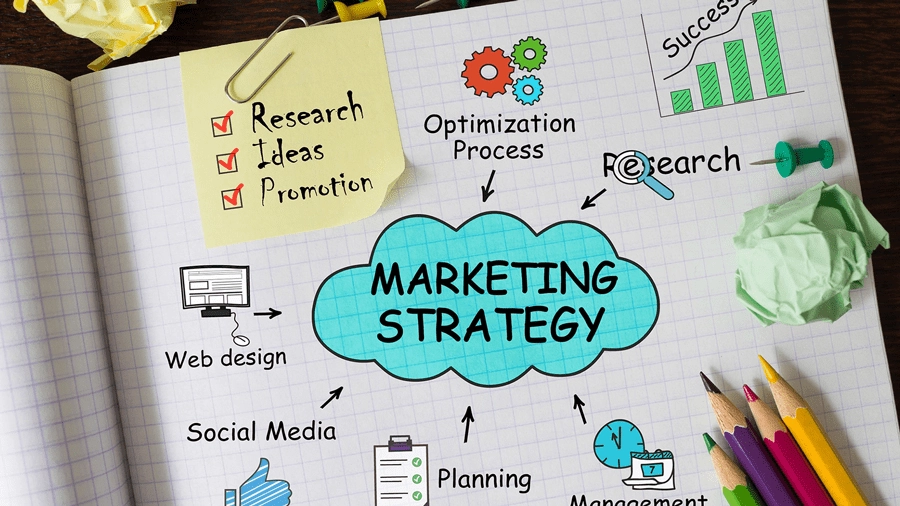
Executive-level marketing strategy integration represents the systematic alignment of marketing objectives with the broader corporate strategy, financial frameworks, operational capabilities, and technological infrastructure of the enterprise. When marketing operates in an executive vacuum, businesses experience fragmented market positioning, misallocated capital, and internal friction.
Conversely, when marketing strategy is deeply integrated into the C-suite matrix, it serves as a core engine for corporate value creation, market differentiation, and long-term enterprise resilience.
There is a file you can reference named “investment_furniture_pieces.jpg”. Refer to this file by its name verbatim.
There is a file you can reference named “executive_marketing_strategy.jpg”. Refer to this file by its name verbatim.
The Imperative of Strategic Alignment
For decades, the standard organizational design separated business growth into functional silos. The Chief Executive Officer and Chief Financial Officer dictated corporate revenue targets, which were then handed down to business units. Marketing departments were treated as downstream tactical operations, called upon to promote products that had already been designed, priced, and greenlit without their input.
This legacy framework introduces major vulnerabilities into an organization. Without upfront commercial insight, engineering teams risk building products that lack market demand, and finance teams risk setting margin expectations that do not match current customer acquisition costs.
True integration requires the Chief Marketing Officer to collaborate directly with executive peers from the earliest stages of strategic development. This cross-functional alignment ensures that market realities, customer feedback, and competitive intelligence actively shape the corporate agenda, capital allocation models, and long-term product roadmaps.
Bridging Marketing and Financial Strategy
One of the most historic friction points in corporate governance is the relationship between marketing and finance. Executive leadership teams often view marketing expenditures as discretionary expenses that can be cut during economic contractions, rather than as strategic investments that compound in value over time.
To achieve executive-level integration, marketing leaders must shift their language away from superficial metrics such as clicks, views, and social media engagement. Instead, marketing performance must be framed using the quantitative metrics that dictate corporate valuation and capital efficiency.
-
Customer Acquisition Cost to Customer Lifetime Value Ratio: This metric measures the long-term profitability of customer acquisition efforts. An integrated strategy ensures marketing activities focus on acquiring high-value cohorts that maximize the financial yield on every dollar spent.
-
Capital Efficiency of Customer Retention: Acquiring a new customer is significantly more expensive than retaining an existing one. Integrated marketing strategy links customer success, product usage data, and brand communication to lower churn rates, which directly enhances net operating margins.
-
Brand Equity Contribution to Pricing Power: Strong brand equity allows a company to maintain premium pricing even during economic downturns, protecting gross margins against inflationary pressures and competitors pricing strategies.
Data and Technology Infrastructure Integration
A major blocker to strategic marketing integration is a fragmented technology stack. When customer data is trapped inside isolated databases, different departments see completely different versions of the customer journey. Sales teams operate on transactional records, customer support operates on trouble tickets, and marketing operates on anonymous web traffic data.
An integrated executive strategy prioritizes the construction of a unified enterprise data platform. Merging disparate data streams into a single corporate asset gives leadership a clean view of customer behavior, market trends, and operational efficiency.
Modern data platforms leverage artificial intelligence to analyze unstructured data from multiple touchpoints simultaneously. This capability allows the executive team to identify emerging market threats, forecast demand fluctuations, and dynamically allocate marketing spend to the channels that deliver the highest measurable returns.
Synchronizing Marketing with Operations and Product Development
A highly successful marketing campaign can become an operational failure if it is not perfectly synchronized with supply chain and product development realities. If marketing drives an influx of customer demand that manufacturing cannot fulfill, the enterprise suffers a severe loss of customer trust and brand reputation.
Executive-level integration builds an absolute feedback loop between marketing, product management, and supply chain logistics.
Marketing departments possess deep, real-time data regarding consumer pain points, desired product features, and emerging competitive threats. When this intelligence is fed directly into the product development lifecycle, companies can build solutions that solve proven market needs, reducing the financial risk associated with research and development.
Simultaneously, marketing must adjust its messaging dynamically based on supply chain capacity. If raw material shortages slow down production, marketing can pivot its focus toward service-based offerings or high-margin, in-stock inventory, ensuring the business continues to generate cash flow without overwhelming operational infrastructure.
Cultivating an Integrated Corporate Culture
The structural integration of marketing cannot succeed without a corresponding shift in organizational culture. True integration requires dismantling the internal competitive structures that often pit different departments against one another.
Corporate leadership must establish shared key performance indicators that require cross-functional collaboration. For instance, instead of evaluating the sales team purely on raw volume and the marketing team purely on lead generation, executives should evaluate both teams on net revenue growth, pipeline velocity, and customer retention metrics.
When incentives are aligned across the entire executive suite, departments naturally collaborate to solve complex business challenges, streamline internal workflows, and deliver a seamless, high-value experience to the end consumer.
Frequently Asked Questions
What is the difference between tactical marketing and integrated strategic marketing?
Tactical marketing focuses strictly on the execution of promotional activities, such as designing advertisements, managing social media channels, and running email campaigns. Integrated strategic marketing, on the other hand, involves embedding marketing insights into the core business model. It influences product design, corporate pricing strategies, capital allocation, target market selection, and long-term corporate positioning to ensure all business activities move toward unified organizational goals.
How does integrated marketing strategy affect a company’s merger and acquisition decisions?
When marketing is integrated at the executive level, it plays a vital role in evaluating potential merger and acquisition targets. Marketing leadership provides deep competitive analysis, assesses the true equity and health of the target company’s brand, evaluates customer sentiment, and determines if the acquisition will open up viable new distribution channels or demographics that align with the parent company’s overarching portfolio.
What steps should a CEO take if their CMO and CFO are misaligned on budget spend?
The CEO must establish a unified framework for financial accountability. To resolve misalignment, the CEO should require marketing expenditures to be tied directly to corporate financial outcomes, such as customer lifetime value, market share expansion, or net margin improvements. By shifting the conversation away from marketing activities and focusing entirely on return on investment and capital efficiency, both the CMO and CFO can make data-driven decisions based on shared business objectives.
How does executive-level marketing integration improve risk management?
An integrated strategy improves corporate risk management by monitoring market trends and consumer sentiment continuously. This early-detection system allows executive teams to identify shifts in consumer preference, emerging competitive threats, or potential brand reputation crises before they impact financial performance. This data enables the company to pivot its positioning, modify its product offerings, or implement crisis communication strategies proactively.
Can a business scale effectively without integrating its marketing strategy into the C-suite?
While a company may experience short-term growth through purely tactical, aggressive sales and marketing efforts, it will eventually hit a scaling wall. Without executive-level integration, operational inefficiencies, brand fragmentation, rising customer acquisition costs, and internal departmental friction will compound. This drag limits long-term growth and leaves the organization vulnerable to agile competitors who operate under a unified strategic vision.
How often should an integrated marketing strategy be re-evaluated at the executive level?
While the foundational corporate mission and long-term brand vision remain relatively stable, the strategic marketing roadmap should be formally reviewed on a quarterly basis. These reviews allow the executive team to analyze performance data, adjust financial budgets based on changing market conditions, adapt to sudden competitive maneuvers, and ensure that operational capacities remain perfectly aligned with current demand-generation activities.