The Neuroscience of Exercise: How the Gym Builds Mental Resilience

Singapore’s reputation as a global hub for finance, technology, and commerce comes with a price that is rarely discussed openly. Burnout rates among Singapore’s working population are among the highest in the Asia-Pacific region. Anxiety, chronic stress, and depressive symptoms are increasingly common across age groups and professional levels. And while the conversation around mental health has grown more visible in recent years, the solutions most commonly offered, therapy apps, mindfulness programmes, and corporate wellness webinars, address the surface level of a problem that runs considerably deeper.
What the neuroscience increasingly and consistently shows is that structured physical exercise, particularly the kind available at a quality fitness gym Singapore, is one of the most powerful interventions for mental health available. Not as a replacement for clinical treatment when it is needed, but as a front-line strategy for building the psychological resilience that protects against breakdown in the first place.
Why Singapore’s Mental Health Crisis Demands More Than Mindfulness Apps
Mindfulness and meditation offer genuine benefits for stress regulation and emotional awareness. The evidence for these practices is legitimate and should not be dismissed. But they operate primarily at the level of cognitive reappraisal, changing how you think about and respond to stressors. They do not change the underlying neurochemistry, hormonal environment, or neurological architecture that determines how resilient your brain is when exposed to pressure.
Exercise operates at a fundamentally different and in many ways deeper level. It changes the physical structure of the brain, alters the production and regulation of key neurotransmitters, reduces the baseline activity of the stress response system, and builds neurological capacity in ways that persist long after each individual session. These changes are measurable, reproducible, and well-documented across decades of research.
What Exercise Does to Your Brain at a Chemical Level
The mental health benefits of exercise are not motivational mythology. They are rooted in specific, well-understood neurochemical and neuroanatomical mechanisms that operate every time you engage in physical training.
BDNF: The Molecule That Grows Your Brain
Brain-derived neurotrophic factor, commonly referred to as BDNF, is a protein that supports the survival, growth, and maintenance of neurons. It promotes the formation of new synaptic connections, supports neuroplasticity, and plays a critical role in learning, memory, and emotional regulation. Exercise, particularly aerobic training, is one of the most potent known stimulators of BDNF production in the human brain.
Research has shown that individuals with depression consistently have lower levels of BDNF than those without, and that exercise-induced increases in BDNF correlate with improvements in depressive symptoms. The hippocampus, a brain region central to memory and emotional regulation, actually increases in volume with regular aerobic exercise, a structural change that is directly linked to BDNF activity. In a very literal sense, regular exercise grows your brain.
Dopamine and the Reward Loop of Consistent Training
Dopamine is the neurotransmitter most associated with motivation, reward anticipation, and goal-directed behaviour. Chronically low dopamine activity is associated with anhedonia, the inability to experience pleasure, which is one of the defining features of depression and burnout. Exercise increases dopamine synthesis, releases dopamine in reward-related brain regions, and upregulates dopamine receptor sensitivity over time.
The implications extend beyond simply feeling good after a workout. Regular training builds a neurological reward loop that makes motivation and goal-directed behaviour progressively easier to sustain, not just in the gym but across all areas of life. People who train consistently often report improvements in work performance, decision-making quality, and sustained focus that are direct downstream effects of exercise-induced dopamine system changes.
Cortisol Regulation Through Physical Exertion
Cortisol is essential in acute doses, it mobilises energy, sharpens focus, and prepares the body for challenge. The problem for most Singaporeans is not acute cortisol spikes but chronic cortisol elevation driven by sustained work stress, inadequate sleep, and insufficient recovery. Chronically elevated cortisol impairs immune function, disrupts sleep architecture, accelerates muscle loss, promotes fat storage, and is directly neurotoxic to the hippocampus over extended periods.
Regular moderate-intensity exercise is one of the most effective tools for recalibrating the hypothalamic-pituitary-adrenal axis, the system that regulates cortisol production. Trained individuals show a more appropriate cortisol response to stressors, meaning that the spike when stress occurs is proportionate and the return to baseline is faster. This improved stress response regulation is one of the key mechanisms through which exercise builds psychological resilience.
Solo Training Versus Group Fitness: The Psychological Difference
Both solo training and group fitness classes offer neurochemical benefits, but they access different psychological mechanisms and produce somewhat different outcomes that make them complementary rather than interchangeable.
Solo training in the gym, working through a structured programme independently, builds self-efficacy, which is the belief in your own capability to achieve goals through sustained effort. Each completed session, each progressive overload milestone, each improvement in a performance metric reinforces a narrative of personal competence that transfers directly to how you approach challenges outside the gym.
Group fitness classes activate a different set of psychological mechanisms. The presence of others exercising alongside you triggers what psychologists call the Kohler effect, the tendency to push harder in a group setting than you would alone. Music, instructor energy, and shared exertion create a state of positive arousal that enhances mood more immediately than solo training. And the social connection that develops within a consistent group fitness community addresses the loneliness and social disconnection that contributes significantly to mental health challenges for many people in Singapore.
Which Exercise Types Deliver the Strongest Mental Health Benefits
The research on exercise and mental health does not point uniformly to one modality as superior. Different types of training access different neurological mechanisms and are therefore most effective for different psychological presentations.
High-Intensity Training and Its Effect on Anxiety
High-intensity interval training and demanding strength sessions produce a large acute cortisol response followed by a significant parasympathetic rebound, the nervous system shift from activated to recovered states. For individuals with anxiety disorders characterised by chronic physiological arousal, this repeated experience of intense activation followed by full recovery trains the nervous system to tolerate and resolve high-arousal states more effectively. Over time, the perceived threat level of everyday stressors diminishes because the nervous system has learned, through repeated training experience, that it can handle and recover from significant challenges.
Boxing Classes for Stress Discharge
Boxing and combat-based training classes offer a unique psychological mechanism that most other training modalities do not provide, which is the physical discharge of aggressive and frustration-based emotional energy in a controlled and socially sanctioned environment. The act of striking a bag with full force while under physical exertion is particularly effective for stress relief because it combines the neurochemical benefits of high-intensity exercise with the cathartic release of expressing physical force. Many participants in boxing-based classes report a distinctive quality of stress relief after sessions that they do not experience from other training formats.
Yoga and Flow Classes for Nervous System Recovery
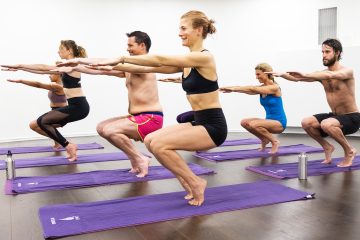
At the opposite end of the intensity spectrum, yoga and flow-based training classes that emphasise breathwork, slow movement, and mindful body awareness activate the parasympathetic nervous system and reduce the baseline activity of the stress response. For individuals who are already sympathetically overdominant from chronic stress, adding more high-intensity training can be counterproductive. Yoga-style classes provide an evidence-backed intervention for reducing cortisol, improving heart rate variability, and improving sleep quality in chronically stressed individuals.
How to Build a Gym Routine as a Mental Health Strategy
Building a gym routine that genuinely supports mental health requires thinking beyond calories burned and muscles worked. The psychological benefits of exercise are most pronounced when training is consistent, appropriately challenging, varied enough to remain engaging, and integrated into a lifestyle that also prioritises sleep, social connection, and adequate recovery.
A practical framework for a Singapore professional using gym training as a mental health strategy might look like two to three moderate-intensity sessions per week including a mix of strength training and a group class, with one yoga or flow session to support nervous system recovery. The total weekly training volume should feel challenging but not punishing, and the routine should be built around sessions you can realistically attend given your working hours and commute.
Consistency over intensity is the key principle. The neurochemical and structural brain changes that make exercise such a powerful mental health tool are dose-dependent and cumulative. They build up over weeks and months of regular training. Missing a week due to travel or illness costs very little. Abandoning the routine entirely because the standard you set was unsustainable costs everything.
TFX Singapore offers a range of class formats, from high-intensity boxing and conditioning sessions to yoga and mindfulness-focused flow classes, giving members the flexibility to build a weekly training schedule that addresses mental health from multiple angles.
Frequently Asked Questions
How many gym sessions per week are needed to see a measurable improvement in mood and anxiety?
Research consistently shows that two to three sessions per week of moderate-to-vigorous physical activity is sufficient to produce measurable improvements in mood, anxiety symptoms, and stress reactivity. The improvements begin within the first few weeks of consistent training and become more pronounced over the following months as neurochemical and structural brain adaptations accumulate. The quality and consistency of sessions matter more than sheer frequency.
I am on antidepressants. Is it safe to do high-intensity training?
For the vast majority of people taking antidepressant medication, exercise including high-intensity training is safe and actively beneficial. Exercise and antidepressant medication operate through complementary neurochemical pathways, and research suggests that combining both produces better outcomes than either alone for many presentations of depression. If you are on medication and beginning a new exercise programme, it is always advisable to inform your prescribing doctor, who can advise on any specific considerations relevant to your medication type and dosage.
Can group fitness classes help with social anxiety or loneliness?
Group fitness environments can be genuinely helpful for people dealing with mild to moderate social anxiety and loneliness, particularly because they provide a structured social context where interaction occurs naturally around a shared activity rather than requiring direct social initiation. The regularity of group classes also builds familiarity with other participants over time, which reduces the cognitive load of social interaction. For severe social anxiety, working with a mental health professional alongside gym participation is advisable.
Is there a specific time of day that is best to exercise for mental health benefits?
The research does not strongly favour one time of day over another for mental health outcomes specifically. The most important factor is consistency, and the best time to train is the time that fits your schedule reliably enough to make it a sustainable habit. That said, morning exercise has been shown to improve mood and cognitive performance throughout the day more reliably than evening training, and evening high-intensity training can interfere with sleep onset for some individuals due to residual sympathetic nervous system activation. For sleep-sensitive individuals, completing high-intensity sessions at least three hours before bedtime is a practical guideline.
How does buddy training at TFX help with motivation and accountability?
Buddy training works through several well-documented psychological mechanisms. Social commitment effects mean that having a training partner creates an external obligation that is significantly harder to abandon than a purely personal intention. The shared experience of challenge and achievement builds social bonds that reinforce continued participation. Friendly competition and the Kohler effect both enhance training intensity. And the social enjoyment of training with a friend makes the activity itself more rewarding, which strengthens the behavioural habit loop that sustains long-term consistency.
Can exercise help with burnout, or do I need to rest completely?
This is a nuanced question and the answer depends on where you are in the burnout cycle. In the acute phase of severe burnout, characterised by complete emotional exhaustion and an inability to function, rest and professional support take priority. However, for the much more common experience of chronic work stress and early-stage burnout, appropriately dosed exercise is one of the most effective interventions available. Low-to-moderate intensity training, particularly yoga, walking, and gentle strength work, supports recovery from burnout without adding to the stress load, while simultaneously rebuilding the neurochemical resilience that protects against its recurrence.